Python Programing
Project Details
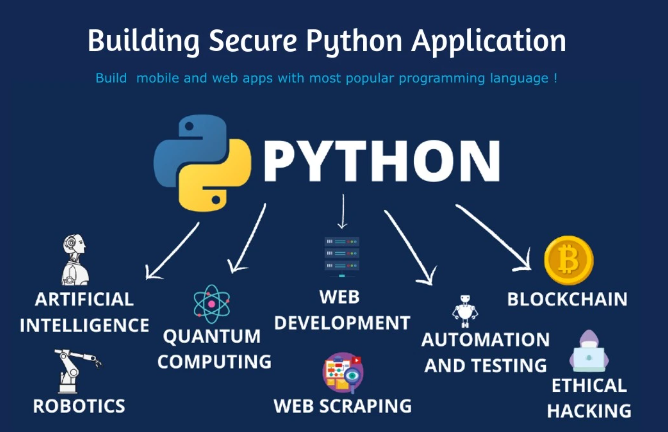
Python Programming: A Beginner’s Guide to Learning One of the World’s Most Popular Languages
Python is one of the most popular and widely used programming languages in the world. It is known for its simple syntax, flexibility, and powerful features, making it a great choice for both beginners and experienced developers. Whether you want to build websites, automate tasks, analyze data, or work with artificial intelligence, Python can be a valuable skill to learn.
One of the biggest advantages of Python is its easy-to-understand syntax. Unlike many other programming languages, Python allows developers to write clean and readable code with fewer lines. This makes it easier for beginners to understand programming concepts and start building useful projects quickly.
Python is used in many different areas of technology. In web development, popular frameworks such as Django and Flask allow developers to create powerful websites and web applications. Python is also widely used for data analysis and visualization. Libraries such as Pandas, NumPy, and Matplotlib help developers work with large amounts of data and turn that information into useful insights.
Another major area where Python has become extremely important is artificial intelligence and machine learning. Developers and researchers use Python libraries such as TensorFlow, PyTorch, and Scikit-learn to create machine learning models, analyze data, and develop AI-powered applications. As artificial intelligence continues to grow, knowledge of Python can open the door to many new opportunities.
Python is also an excellent language for automation. Repetitive tasks that normally require a lot of manual work can often be automated using Python scripts. For example, Python can be used to organize files, process data, collect information, generate reports, and perform many other routine tasks.
For beginners, learning Python can start with the fundamentals. Important topics include variables, data types, operators, conditional statements, loops, functions, lists, dictionaries, and object-oriented programming. After learning these basics, beginners can move on to practical projects that help turn theoretical knowledge into real-world skills.
There are many free resources available for learning Python, including online tutorials, documentation, courses, and programming communities. However, regular practice is one of the most important parts of becoming a better programmer. Writing small programs and gradually working on larger projects can significantly improve problem-solving and coding skills.
In conclusion, Python is a versatile programming language with applications across web development, automation, data science, artificial intelligence, and many other fields. Its simple syntax and extensive library ecosystem make it an excellent starting point for people who want to enter the world of programming. With consistent learning and practical experience, Python can become a powerful skill for personal projects, education, and professional development.